

投稿日:2026-10-31 | 最終更新日:2026-11-01
はじめに
アメリカ滞在記の最後は、お金の話です。
今回は、2025年のアメリカ滞在、10月1日〜31日の31日間にいくらかかったのか、まとめてみました。旅の話を書くとき、費用のことはつい後回しになるけれど、これも記録として残しておこうと思います。
なお、金額はすべて日本円で記載しています。当時の為替レートやクレジットカードの決済レートを考えると、1ドル約153円ぐらい。
2025年のアメリカ滞在費用は約128.4万円
最初に総額を書くと、約128.4万円でした。
予算は132.5万円だったので、約4.1万円下回りました。全体では予算内に収まったものの、項目ごとに見ると、予定よりかかったものと、少なく済んだものがあります。
まずは、アメリカでのお金の使い方から。
アメリカでのお金の使い方
アメリカでは、ほぼすべてクレジットカードで支払い。現金を使ったのはチップ、タトゥー、バッグの制作をお願いしたときぐらいです。
日本の空港で1万円ほどをドルに両替して持っていきましたが、空港の両替レートはあまり良くありません。そのため、現地で必要になった現金はクレジットカードの海外キャッシングで引き出し。使う日の直前にキャッシングし、帰国後に繰り上げ返済することで利息を抑えました。私の場合は、空港で両替するよりも手数料を含めた負担が少なく。また、多額の現金を持ち歩く必要がないのもメリットです。
海外キャッシングを利用する際の注意点
ただし、クレジットカードによっては海外キャッシングが利用できないものもあります。また、海外キャッシングに対応していても、必ず利用できるとは限りません。
主に次のようなケースがあります。
・キャッシング機能がないカード
・キャッシング枠が設定されていないカード
・海外キャッシングに対応していないカード
・現地ATMとの相性や利用制限によって引き出せない場合
渡航前に海外キャッシングの利用可否と利用可能枠を確認しておくと安心。また、ATMの手数料や繰り上げ返済の方法もカード会社によって異なるので、事前に調べておくことをおすすめします。
海外でクレジットカードが使えなくなった話
もうひとつ、クレジットカードについて気をつけたいことがあります。
カード会社によっては、海外で突然大きな金額の決済をすると、不正利用を疑われてカードが一時的に利用できなくなる場合があります。
実際、2023年にアメリカへ行ったとき、到着した空港のレンタカー会社でカードがロックされてしまいました。
アメリカのホテルやレンタカーでは、デポジット(保証金)としてクレジットカードの利用可能枠が一時的に確保されることがあります。カード会社からすれば、海外でいきなり20万円前後の決済が発生すれば、不正利用を疑うのも今となっては理解できます。
その場でカード会社に連絡しようとしたのですが、私のスマホに入れていた海外SIMはデータ通信専用で、電話ができないタイプ。仕方なく公衆電話を探しましたが、到着したアメリカの空港には公衆電話がありませんでした。幸い、予備のクレジットカードをもう1枚持っていたので、無事にレンタカーを借りることができました。
ただ、もうこんな思いはしたくない。
ということで、今回は渡航前にカード会社へ連絡。約1ヶ月間アメリカに滞在すること、レンタカーのデポジットなどでそれなりの金額が動くことを伝え、できるだけ利用を止めないようにしてほしいとお願いしました。実際、今回は一度もカードがロックされることはありませんでした。もちろん、事前に連絡したからといって必ずロックを防げるわけではありませんが、海外に長期滞在する方はカード会社に確認しておくと安心だと思います。
そして、予備のカードも忘れずに。
航空券|約13.0万円
まず、往復の航空券が約13.0万円。予算は15万円だったので、約2.0万円少なく済みました。
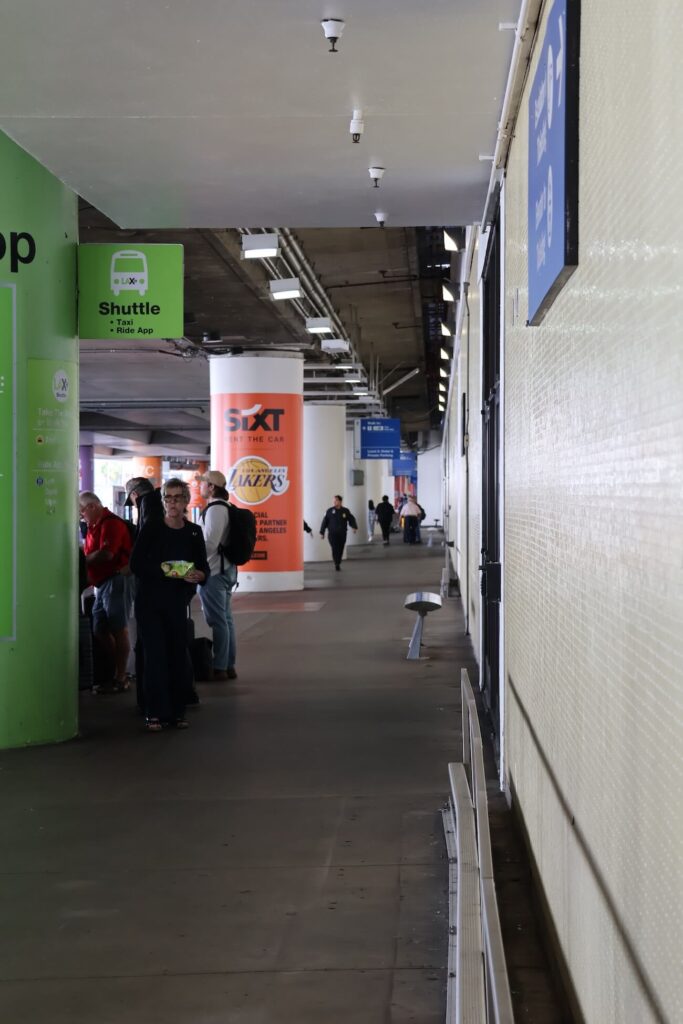
今回はロサンゼルス国際空港(LAX)から入国し、帰りも同じ空港から出国。ロサンゼルスのような大きな空港を選ぶと、航空会社や便の選択肢が多く、比較的安い航空券も見つけやすいです。ちなみに今回は、ユナイテッド航空の直行便でした。

宿泊費|約33.6万円
ホテル代は約33.6万円。
予算は1泊1万5,500円×30泊で46.5万円。対して約12.9万円少ない結果でした。30泊分の宿泊費なので、1泊平均約1.1万円。
ほとんどがその地域で最安値に近いモーテルだったにもかかわらず、この金額です。
ちなみに帰国前にロサンゼルスに泊まったときは、1泊約1.6万円。空港近くのモーテルでしたが、最安値に近いところでもロサンゼルスは高いです。ここは予算オーバー。
モーテルは現地で探して予約
モーテルは、アメリカに入国した当日の宿泊先だけ日本で予約し、あとは現地で予約しています。
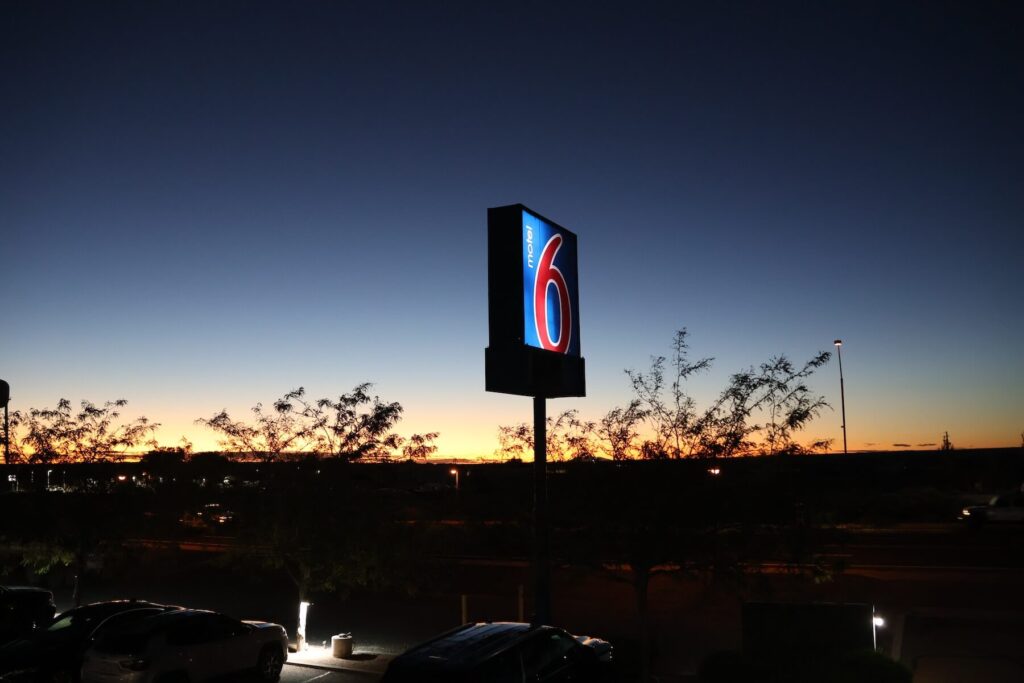
長距離を走るときは、途中で宿泊する場所をある程度想定しておき、高速道路沿いにモーテルが多いエリアを事前に調べておきます。そして当日、そのあたりのチェーン系モーテル(Motel 6、Super 8、Days Innなど)の駐車場まで行き、周囲の雰囲気や治安に問題がなさそうであれば、その場でスマホから予約。
1泊だけで、とりあえず寝られればいいという場合は、チェーン系がなんだかんだ安心です。探せばもっと安い宿もありますが、夕方に到着して翌朝早く出発するような場合は、ある程度のところで決めてしまったほうが楽。
モーテルの予約方法と料金交渉
予約方法は日本とほとんど同じです。
Googleマップでホテル名をクリックすると、複数の宿泊予約サイトの料金が表示されるので、その中から安いところを選びます。私はBooking.com、Expedia、Agodaあたりを中心に利用していました。
ただ、他と比べて極端に安いサイトは少し警戒したほうがいいかもしれません。
あまり聞いたことのない予約サイトだと、予約がすぐに宿泊施設へ反映されないこともあります。もちろん大手だから絶対に安心というわけではありませんが、私は基本的にこの3サイトから選ぶようにしています。
ちなみに、モーテルの窓口で直接予約するより、宿泊予約サイトを通したほうが安い場合が多かったです。ただし、1週間以上滞在するような場合で、チェーン系ではないモーテルなら、直接窓口で交渉すると結構安くなることがあります。
もちろん、ニコニコしながら。笑顔は世界共通です。

食費|約18.8万円
予算は1日1万円×31日で、31万円。
実際は約18.8万円。1日平均約6,100円。こちらは約12.2万円少なく済みました。
2023年の滞在では、一人で食事をするときはほとんどスーパーで買った巨大なサラダとビールでしたが、今回はそれなりに外食しました。といっても、基本はハンバーガーやピザなどのファストフード。そういえば、ファストフード以外のレストランには5回ぐらいしか行っていないかも。私は食についてそれほどこだわりがなく、しかもアメリカの食事が大好きなので、これでまったく問題ありませんでした。
アメリカで日本食が食べたくなったら
ただ、長期滞在でどうしても日本食が食べたくなる方は、もう少し食費がかかると思います。
実際、Walmartなどのスーパーでもお寿司は売っていますが、それなりの値段がするわりに、正直あまりおいしくありません。これならサラダのほうがいいかなと。和食が食べたくなったら、レストランに行くほうがおすすめです。
あとは、ファストフードでもご飯が食べたければ中華料理系がおすすめ。結構脂っこいですが、チャーハンでお米を食べられるし、焼きそばのような麺料理もあります。
キッチンカーも意外と高い
それから、今回の滞在で目についたのがキッチンカーの多さ。
イベント会場ではなく、ちょっとした空き地に数台のキッチンカーが常設されている場所を結構見かけました。バーの駐車場にキッチンカーがあることも多かったです。バーでドリンクを買い、キッチンカーで食事を買うという感じですね。
ただ、このキッチンカーも結構高い。おすすめされるままにトッピングを増やしていると、数千円は簡単にいってしまいます。
そう考えると、安心なのはやはりハンバーガーチェーン店。写真を見て選べるので、注文で大きく失敗することもありません。安くても1食1,500円ぐらいは普通にしますが。
宿泊費と食費を合わせると、予算より約25.1万円少なく済みました。
今回の旅行全体が予算内に収まったのは、この2つの差が大きかったからです。
レンタカー・ガソリン代|約40.7万円
一方、車にかかったお金は予算を上回りました。
レンタカーは30万円の予算に対して約32.1万円。ガソリンは5万円を見込んでいましたが、実際には約8.6万円でした。
今回の総走行距離は約6,100km。ガソリン代だけで計算すると、1km走るのに約14円かかったことになります。ちなみに燃費は、当時のガソリン価格から逆算すると約9km/Lだったと思われます。ただし、州によってガソリン価格は異なり、正確な給油量を記録していたわけではないので、あくまで概算です。
今回はガソリン代の高いカリフォルニア州をほとんど走っていません。もし同じ距離をすべてカリフォルニアで走っていたら、ガソリン代は1.5倍ぐらいかかっていたかも。
ちなみに、2025年のアメリカのレギュラーガソリンは、全米平均で1Lあたり約125円(1ドル153円換算)でした。ただし、州によって価格にはかなり差があります。
レンタカーとガソリン代を合わせると約40.7万円。予算より約5.7万円多くかかっています。こうしてまとめると、車関係だけで約41万円。今回の支出の中でも大きな部分でした。
レンタカーは大手を選ぶ理由
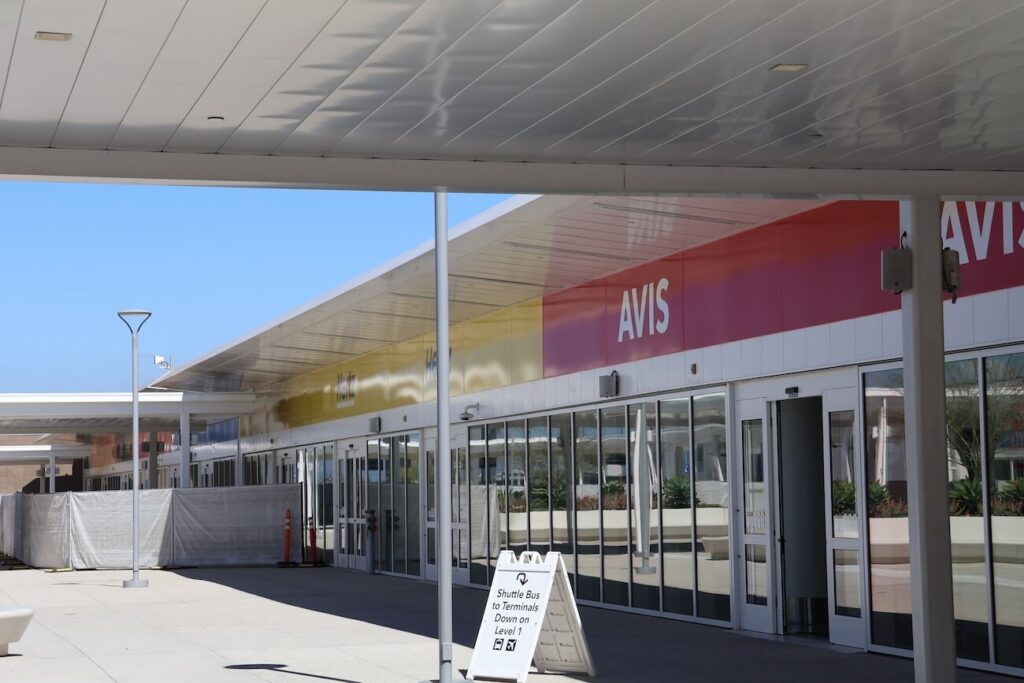
毎回一人で長距離を走るので、レンタカーは多少高くても大手の会社を選びます。今回はAVISを利用しましたが、返却まで何も問題ありませんでした。
ちなみに2023年もAVISで借りたのですが、途中でオイル交換の警告が表示されたことがありました。AVISにメールで問い合わせると、最寄りの営業所に持っていってほしいとのこと。大手だと各地に営業所があるのも強みです。
実際に営業所へ行くと、車の整備履歴を調べてくれました。オイル交換はきちんと行われていて、警告表示をリセットしていなかっただけかもしれないとのこと。そのまま乗っていて大丈夫と言われ、安心して旅を続けることができました。
大きなアメリカ車を借りた結果
それから、毎回せっかくアメリカを走るならと、そこそこ大きな車を借りているのも費用が高くなる理由のひとつです。
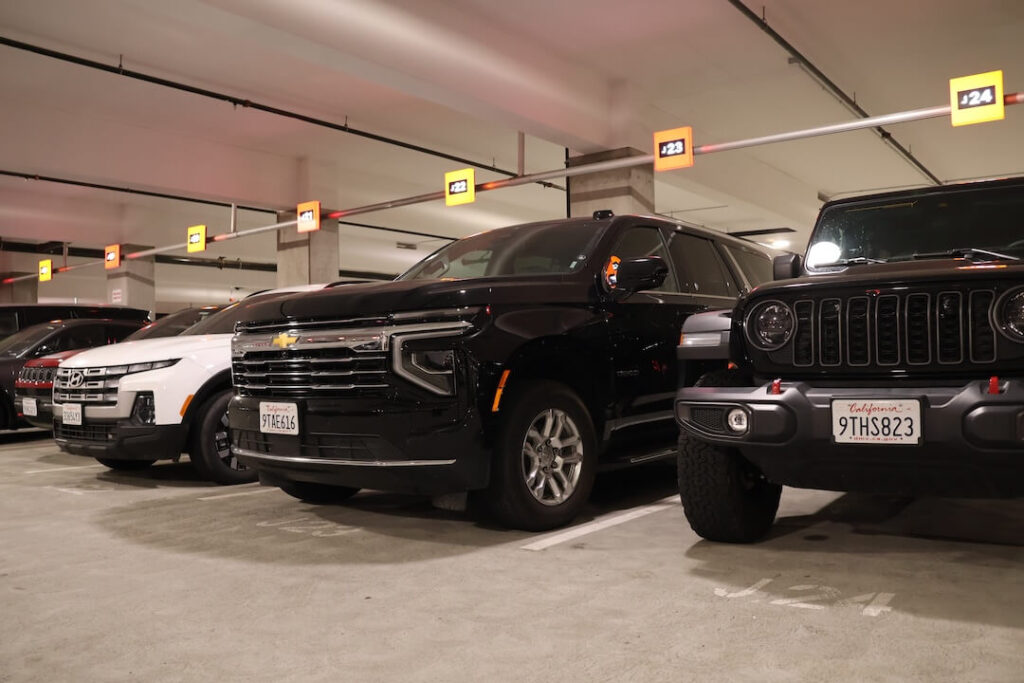
今回はフルサイズピックアップトラックを予約していたのですが、まさかの空港に車がないということで、アップグレードしてもらったのが2025年モデルのシボレー・タホ。まぁ、十分楽しめましたが、当然燃費も良くありませんよね。
2023年にはダッジ・ラム1500を借りて、アメリカの大きな車は結構満喫しました。
なので、次回はもう少し小さい普通の車でもいいかなと思っています。
買い物・海外旅行保険|約6.3万円
そのほか、買い物などとして記録した分が約4.3万円。
これは現地の自転車屋さんを訪問したときに買ったTシャツや、交換用のチューブなどです。思ったより使ったかもしれません。
海外旅行保険は約2.0万円でした。
ここまでの航空券、宿泊費、食費、レンタカー、ガソリン代、買い物、海外旅行保険を合計すると、約112.4万円になります。
日本での準備費用とその他の支出|約16.0万円
ただし、今回の総額には、それ以外の支出も含めています。
洋服や靴、ソックス、耳栓、カメラストラップ、旅行用の収納用品など、日本で準備していったもの。それから、国外運転免許証、ESTA、eSIM、名刺やステッカー、薬などです。アメリカで入れたタトゥーの約4.8万円も、この記録に含めています。
また、モーテルのような安い宿には、タオルぐらいしかアメニティが用意されていないことも多いです。そのため、歯ブラシ、シャンプー、石鹸なども日本から持っていきました。もちろんアメリカでも購入できますが、日本より高いものも多いですし、1ヶ月分だけの小さなサイズを買うのも割高なので。
これらを合わせた金額が約16.0万円でした。
つまり、約128万円というのは、現地での宿泊や食事、移動だけの金額ではありません。日本で購入した準備用品など、今回の滞在に関連して記録した支出も含めた総額です。すでに持っているものを使うか、新しく買うかによっても費用は変わります。
あくまで、2025年の私のアメリカ滞在ではこれだけかかった、という記録です。
まとめ|約128万円のアメリカ滞在
予算と実費を並べてみると、合計だけでは分からなかったことも見えてきます。宿泊費と食費は予定より少なく、レンタカーとガソリン代は予定より多かった。全体では約4.1万円の余裕がありましたが、それぞれの項目が予定どおりだったわけではありませんでした。
約128万円。
小さな金額ではないし、こうして数字を並べると、改めてまとまったお金がかかったことが分かります。次にアメリカへ行くときには、今回の数字を見返しながら予算を考えることになると思います。特に車関係の費用は、今回の実費をひとつの目安にしておきたいところです。
最後に
今日は2026年10月31日。
アメリカ滞在から、このブログを書き終えるまで約1年かかりました。これだけ長く、時には冗長なブログにお付き合いいただき、本当にありがとうございました。
できれば2年に1回はアメリカへ行きたいと思っているので、次回は2027年。もう来年ですね。
これで、2025年のアメリカ滞在記はおしまいです。
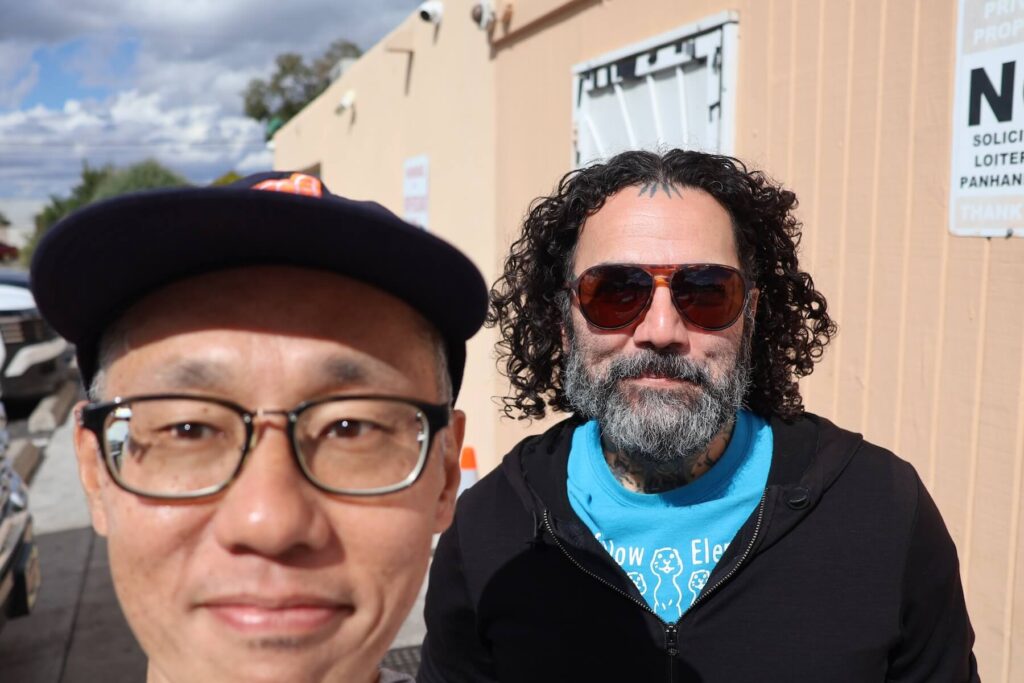
今回もたくさんの人たちに会うことができました。最後に、その中から一緒に写真を撮ってくれた人たちとの2ショットを載せておきます。
最後まで読んでいただき、ありがとうございました。




















Final Part of My 2025 US Trip: What I Spent in 31 Days
Introduction
For the final installment of my American road trip series, I’m talking about money. This time, I put together a breakdown of how much I spent during my 31-day trip to the U.S., from October 1 to 31, 2025. When writing about a trip, it’s easy to focus on the places and people and leave the expenses out. But I thought the numbers were worth documenting, too.
Since the original Japanese version of this article uses Japanese yen, I’ve kept all the amounts in yen for the English version as well. For reference, the exchange rate at the time, including the rates used by my credit cards, was roughly ¥153 to US$1.
My 2025 U.S. Trip Cost About ¥1,284,000
I’ll start with the total: approximately ¥1,284,000. My original budget was ¥1,325,000, so I came in about ¥41,000 under budget.
Overall, I managed to stay within my budget, but some expenses were higher than expected while others were considerably lower. First, a little about how I handled money in the U.S.
How I Paid for Things in the U.S.
I paid for almost everything with a credit card. The only times I really needed cash were for tips, a tattoo, and paying someone to make a bag for me. Before leaving Japan, I exchanged about ¥10,000 into U.S. dollars at the airport, but airport exchange rates aren’t particularly good.
So whenever I needed more cash during the trip, I used my credit card to withdraw money from an ATM. I made withdrawals shortly before I needed the cash and paid off the cash advances early after returning to Japan to minimize interest. In my case, even after fees, this worked out cheaper than exchanging money at the airport. It also meant I didn’t have to carry a large amount of cash around.
A Few Things to Know About Credit Card Cash Advances
Not every credit card allows international cash advances. And even if your card supports them, there’s no guarantee you’ll be able to withdraw money from every ATM.
There are a few possible reasons:
- Your card doesn’t have a cash advance feature.
- You haven’t been assigned a cash advance limit.
- Your card doesn’t support international cash advances.
- The ATM may not accept your card, or there may be local withdrawal restrictions.
Before traveling, it’s worth checking whether your card supports international cash advances and how much you’re allowed to withdraw. ATM fees and early repayment procedures also vary depending on your card issuer, so I recommend looking into those beforehand.
When My Credit Card Stopped Working in the U.S.
There’s another thing worth knowing about using credit cards overseas. Some card issuers may temporarily block your card if they detect an unusually large transaction in another country, suspecting fraudulent activity.
That’s exactly what happened to me in 2023. When I arrived in the U.S. and went to pick up my rental car at the airport, my credit card was suddenly blocked. Hotels and rental car companies in the U.S. often place a temporary hold on your credit card as a security deposit. Looking back, I can understand why my card issuer might have been suspicious when a transaction of around ¥200,000 suddenly appeared overseas.
I tried contacting my card company, but the international SIM I’d installed on my phone was data-only, meaning I couldn’t make regular phone calls. I went looking for a pay phone, but there wasn’t one anywhere in the airport. Fortunately, I had brought a second credit card, so I was still able to rent the car.
But I really didn’t want to go through that again.
So before this trip, I contacted my card issuer and explained that I’d be spending about a month in the U.S. and that some relatively large transactions, including rental car deposits, were likely. I asked them to make a note of my travel plans and, if possible, avoid blocking my card unnecessarily.
This time, my card worked throughout the entire trip without any problems. Of course, notifying your card issuer in advance doesn’t guarantee that your card won’t be blocked. But if you’re planning an extended trip overseas, I think it’s worth checking with them. And definitely bring a backup card.
Flights | About ¥130,000
My round-trip airfare came to approximately ¥130,000, about ¥20,000 less than my ¥150,000 budget. I flew into Los Angeles International Airport (LAX) and departed from the same airport on my way home.
Choosing a major airport like LAX gives you more airlines and flights to choose from, which can make it easier to find reasonably priced tickets. This time, I flew nonstop with United Airlines.
Accommodation | About ¥336,000
Accommodation cost approximately ¥336,000. I’d budgeted ¥465,000 for 30 nights at ¥15,500 per night, so I ended up spending about ¥129,000 less than expected. That works out to an average of roughly ¥11,000 per night.
And that’s despite staying almost exclusively at some of the cheapest motels available in each area. For example, my final night near Los Angeles Airport cost about ¥16,000. Even one of the cheapest motels near the airport was expensive by comparison. That particular night went over my daily budget.
Finding and Booking Motels Along the Way
I only booked my first night’s accommodation in advance from Japan. Everything else was booked while I was on the road.
On days when I had a long drive ahead, I’d roughly decide where I wanted to stop for the night and look for areas with plenty of motels near the interstate. Once I arrived, I’d pull into the parking lot of a chain motel, such as Motel 6, Super 8, or Days Inn, and check out the surroundings. If the area seemed reasonably safe and comfortable, I’d book a room right there on my phone.
When all you need is a place to sleep for one night, chain motels are generally a reliable choice. You can sometimes find cheaper independent places, but after a long day of driving, especially when you’re leaving early the next morning, it’s often easier to settle for somewhere decent rather than keep searching.
Booking Motels and Negotiating Rates
Booking accommodation in the U.S. works pretty much the same way as it does in Japan. When you select a hotel on Google Maps, you’ll usually see prices from several booking websites. I simply compared them and chose one of the cheaper options. I mainly used Booking.com, Expedia, and Agoda.
That said, I’d be a little cautious about booking websites offering prices that are dramatically lower than everyone else’s. With lesser-known websites, there’s sometimes a delay before your reservation reaches the property. Major booking sites aren’t completely risk-free either, but I generally stuck with those three.
Interestingly, booking through a website was often cheaper than walking up to the motel’s front desk. However, if you’re staying somewhere for a week or longer, particularly at an independently owned motel, you can sometimes negotiate a pretty good rate directly with the staff.
With a smile, of course. A smile works in any language.
Food | About ¥188,000
My food budget was ¥10,000 per day for 31 days, or ¥310,000 in total. I actually spent about ¥188,000, averaging roughly ¥6,100 per day. That’s approximately ¥122,000 under budget.
During my 2023 trip, whenever I ate alone, I mostly survived on enormous salads from supermarkets and beer. This time, I ate out a little more. Although, to be fair, it was mostly burgers, pizza, and other fast food.
Come to think of it, I might have eaten at a proper sit-down restaurant only five times during the entire trip. I’m not particularly picky about food, and I genuinely love American food, so this wasn’t a problem for me at all.
What If You Start Craving Japanese Food?
If you’re spending a long time in the U.S. and really can’t live without Japanese food, you’ll probably need a slightly bigger food budget. You can find sushi at supermarkets like Walmart, but in my experience, it’s not particularly good considering what it costs. At that point, I’d rather just have a salad.
If you’re really craving Japanese food, I’d recommend going to a Japanese restaurant instead. Another option, if you just want something with rice, is Chinese fast food. It can be pretty greasy, but at least you can get fried rice or noodle dishes similar to yakisoba.
Food Trucks Aren’t Necessarily Cheap
Something else I noticed on this trip was just how many food trucks there were. Not just at events, either. I came across quite a few places where several food trucks were permanently parked together on small vacant lots. I also noticed food trucks operating in bar parking lots. The idea seems to be that you grab a drink at the bar and get your food from the truck.
But food trucks can be surprisingly expensive. If you keep saying yes to the recommended toppings and extras, it’s easy to end up spending several thousand yen on one meal.
In that sense, familiar burger chains are a pretty safe bet. You can see pictures of what you’re ordering, so there aren’t too many surprises. Although even a relatively cheap meal can easily cost around ¥1,500.
Combined, my accommodation and food expenses came in approximately ¥251,000 under budget. Those savings were the biggest reason I managed to keep the overall trip within my original budget.
Rental Car and Gas | About ¥407,000
On the other hand, my vehicle expenses went over budget. I’d allocated ¥300,000 for the rental car, but it ended up costing approximately ¥321,000. For gas, I’d budgeted ¥50,000, but actually spent around ¥86,000.
I drove approximately 6,100 km (3,790 miles) during the trip. Based on my total fuel expenses, that works out to about ¥14 per kilometer. As for fuel economy, I estimate the vehicle averaged around 9 km/L (about 21 mpg), based on gas prices at the time. However, gas prices vary considerably between states, and I didn’t keep an exact record of how many liters I purchased, so that’s only a rough estimate.
I spent very little time driving in California, where gas tends to be considerably more expensive. If I’d driven the same distance entirely within California, my fuel costs might have been around 1.5 times higher.
For reference, the average price of regular gas across the U.S. in 2025 was approximately ¥125 per liter, based on an exchange rate of ¥153 to US$1. Prices varied significantly from state to state.
Together, the rental car and gas came to approximately ¥407,000, or ¥57,000 over budget. Looking at it now, I spent around ¥410,000 just on the car. It was one of the biggest expenses of the entire trip.
Why I Prefer Major Rental Car Companies
Since I usually travel alone and cover long distances, I prefer renting from a major company, even if it costs a little more. This time I rented from Avis, and everything went smoothly until I returned the vehicle.
I also rented from Avis in 2023, although I had a small issue during that trip. At one point, an oil change warning appeared on the dashboard. I emailed Avis, and they told me to bring the vehicle to the nearest branch. That’s one of the advantages of renting from a large company: they have locations all over the country.
When I arrived, the staff checked the vehicle’s maintenance records. The oil had been changed properly, and they suspected that someone had simply forgotten to reset the warning indicator. They assured me the vehicle was safe to drive, and I was able to continue my trip without worrying about it.
What Happens When You Rent a Big American Vehicle
Another reason my transportation expenses tend to be high is that, whenever I visit the U.S., I like to rent something fairly big. After all, if I’m going to drive across America, I might as well enjoy driving a big American vehicle.
This time, I’d reserved a full-size pickup truck. But when I arrived at the airport, they didn’t have one available. Instead, they upgraded me to a 2025 Chevrolet Tahoe.
Well, I certainly enjoyed driving it, but naturally, fuel economy wasn’t exactly its strong point. In 2023, I rented a Ram 1500, so I think I’ve had my fair share of big American vehicles by now. Next time, I might just rent a smaller, more ordinary car.
Shopping and Travel Insurance | About ¥63,000
I also recorded approximately ¥43,000 in shopping expenses. Most of that was spent on T-shirts from bicycle shops I visited, replacement inner tubes, and similar things. I may have spent a little more than I realized.
Travel insurance cost approximately ¥20,000. Adding together airfare, accommodation, food, the rental car, gas, shopping, and travel insurance brings the subtotal to approximately ¥1,124,000.
Preparations in Japan and Other Expenses | About ¥160,000
However, the total cost of the trip also includes expenses beyond those main categories. Before leaving Japan, I bought things like clothes, shoes, socks, earplugs, a camera strap, and various travel organizers. There were also expenses for an International Driving Permit, ESTA, an eSIM, business cards, stickers, medication, and other necessities.
I also included the approximately ¥48,000 I spent on a tattoo in the U.S.
Another thing worth mentioning is that cheaper motels often provide very few amenities beyond towels. So I brought my own toothbrush, shampoo, soap, and other toiletries from Japan. Of course, you can buy all of these things in the U.S., but some are more expensive than in Japan, and buying small quantities just for a month can be poor value.
All these additional expenses came to approximately ¥160,000.
In other words, the ¥1.28 million total isn’t just what I spent on hotels, food, and transportation while I was in America. It also includes the things I bought in Japan specifically for the trip, along with other related expenses.
Naturally, the cost will vary depending on what you already own and what you need to buy. This is simply a record of what my own month in America cost in 2025.
Looking Back at My ¥1.28 Million Trip
Comparing my original budget with what I actually spent reveals a few things that aren’t obvious from the final total alone. Accommodation and food were considerably cheaper than expected, while the rental car and gas cost more. Overall, I came in about ¥41,000 under budget, but that doesn’t mean every category went according to plan.
About ¥1.28 million.
It’s certainly not a small amount of money, and seeing all the numbers laid out like this really puts the cost of the trip into perspective.
When I plan my next visit to the U.S., I’ll probably come back to these figures to help work out a realistic budget. In particular, I think my actual vehicle expenses will be a useful reference for next time.
Final Thoughts
Today is October 31, 2026. It’s taken me about a year since returning from the U.S. to finish writing this travel series.
Thank you so much for sticking with these long, and sometimes probably overly detailed, blog posts.
Ideally, I’d like to visit America every two years, which would make my next trip in 2027. That’s already next year.
And with that, my 2025 American road trip series comes to an end.
I was fortunate enough to meet so many wonderful people along the way. To finish things off, I’ve included a few photos of myself with some of the people I met during the trip.
Thank you again for reading all the way to the end.